outoftheboxstall
If you change the way you look at things, the things you look at change-Wayne Dyer
Judges Cards Don’t Grow on Trees
By Karen Waite Warner
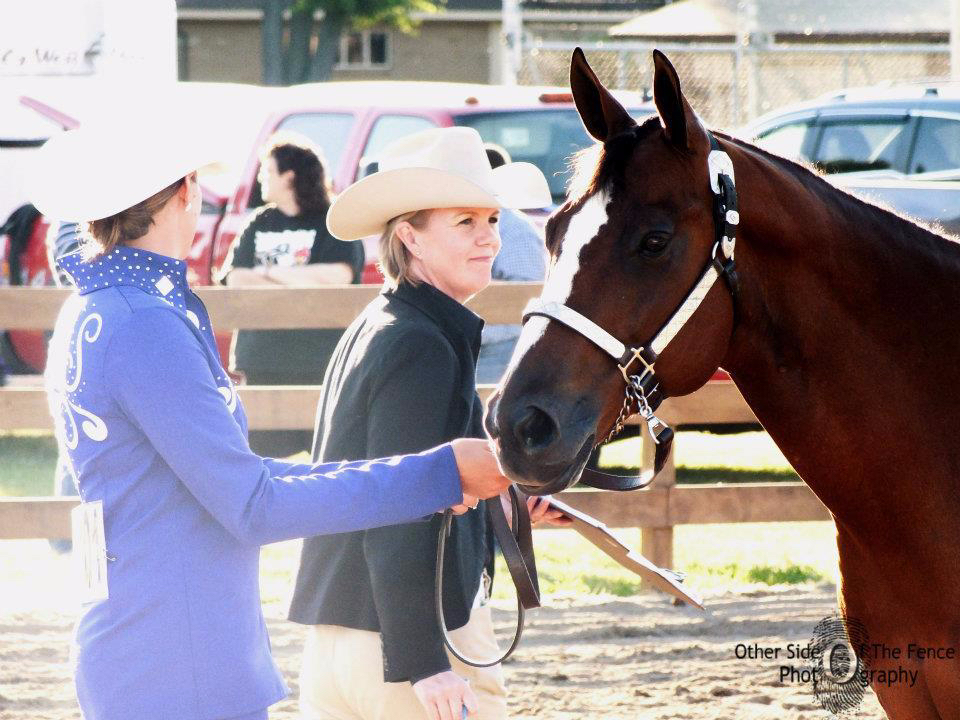
The next time you go to a horse show and don’t do as well as you’d like, and think, or even worse, say out loud “those judges don’t know anything”, or “it’s just an opinion” I’m hear to tell you, you’re (usually) mistaken. I say usually, by the way, because not every state open show or 4-H program has a process for carding (certifying) horse judges, but many do, and all breed associations have their own process of making sure that people are knowledgeable and ready to judge horse shows.
First, I think it’s important to share that judging a horse show is a skill set all its own. Yes, you need to have shown horses along the way, and maybe you train horses full time, but that alone isn’t enough to be a competent judge. You need a thorough understanding of the rulebook in question, and every relevant rule in it. Not to mention the expected understandings that AREN’T usually in it. To complicate things further, each rulebook is a little different, even at the breed level. For example, one breed will let you hand gallop 12 horses in Hunter Under Saddle and one will allow 8. You need to know where you are. One association calls 3,5,and 10 point penalties and another 1,3, and 5. You also need to stay organized, think on your feet, and do it all on a hot dog and an iced tea.
You also need to understand how to score those pattern classes. All of them, not just the ones you’re familiar with. The penalties for breaking gait at the lope are different for Reining, Western Riding, Horsemanship, Equitation, and Ranch, and that’s just the start.
The other part of judging that gets missed sometimes is the physical and mental nature of it. When judging outdoors you need to be able to give every horse and exhibitor a fair consideration whether it is hot, cold, raining, snowing, windy, or absolutely perfect. And you need to do it for 10-12 hours and sometimes longer, when there may be things going on with your family or horses that you feel you should also be there for. And while you are doing all of that, you need to remain as professional, focused, and emotionally calm as possible, even though the majority of folks at the horse show probably don’t agree with your placings.
It may sound like I’m complaining, but I’m definitely not. I love judging horse shows, and I love the people involved, (even when they are mad at me because they didn’t win). I especially love the horses that try even when they would rather be in the stall or pasture eating and living their best horse life. For some horses, they seem as though they’d rather be with their human regardless, and nothing is more fun to watch than that.
I recently completed testing for 2 breed associations so all of this is fresh in my mind. Video judging, rulebook tests, interviews and more video judging after studying two separate rulebooks for weeks. It was exhausting, and in some ways more stressful than getting a doctorate, but actually, it should be. Exhibitors deserve judges who are well-prepared and who can represent the association positively and professionally whenever possible. They can’t get angry or overly emotional when questioned, and at the appointed time and place, they should be able to justify their placings. Sure, they’re human and sometimes they look down at the wrong time or miss something, but they’ll beat themselves up long after the show is over.
Ultimately, judges are there to represent the values of the association they are working for and it’s important to remember that every association and organization has slightly different values. But one thing never changes…every horse judge I know wants people to have the best experience possible, to enjoy their horse, and to come back again.
 outoftheboxstall
Recent Comments